
AQL Garment Inspection
Strict ISO 2859-1 Compliance 24-Hour Pass or Fail Reports 0.0 Tolerance for Critical Defects
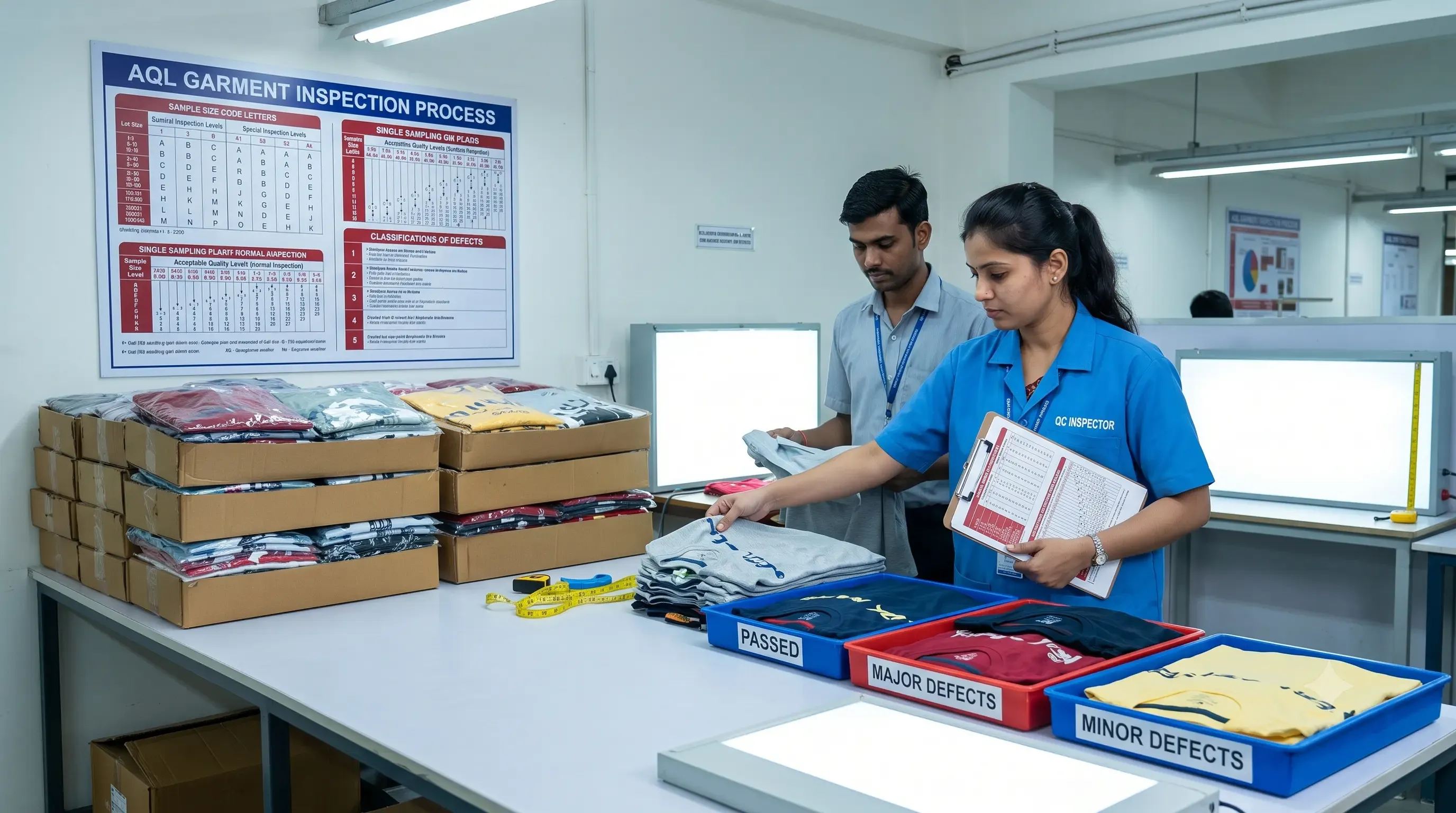
Internal factory quality teams often overlook calculations and bend the rules when shipping deadlines loom. Studies actually show that factory self-reporting usually fails to catch roughly 12 to 18 percent of actual defects. Brands end up approving bulk lots that statistically shouldn't have been accepted, resulting in high, costly retail returns. An independent AQL garment inspection applies rigid mathematical limits to defect rates so shipping decisions are based on factual data rather than optimistic factory assurances.
- Pre-Shipment AQL Inspection
Inspectors conduct random samplings prior to loading to verify the lot matches the approved standard.
- ISO 2859-1 Sampling Plans
There is no assumptions on sample quantity. Exact mathematical tables for General Inspection Level II are used, meaning exactly 315 pieces are inspected for a 10,000 unit order.
- Defect Classification
Critical, major, and minor defects are strictly categorized according to product specifications.
- Live Defect Dashboards
See exactly which sewing lines are failing before the final PDF is even generated.
- Carton Integrity Checks
A passed garment is wasted if the shipping box is damaged during transit. Barcode scans and cardboard durability are thoroughly checked in the warehouse.
For Brands
Stop paying for factory mistakes: Safeguard product margins with rigid AQL 2.5 garment standards. Lower return rates caused by loose threads and poor fit. Get independent verification of exact tech pack requirements.
For Buying Houses
Standardize an AQL inspection textile rule across all factories. Use detailed reports to force non-compliant suppliers to rework goods. Keep brand clients informed with highly reliable defect data.
For Factories
Identify recurring line faults early before the final audit happens. Prevent full shipment rejections and sudden air freight penalties that can easily average $1,400 per shipment. Clear goods faster with predictable inspection criteria.
Set the tolerance.
Define the Acceptable Quality Limit. Most apparel brands default to 2.5 for major defects.
Local coordination.
Operations teams contact the factory directly to confirm packing readiness and avoid wasted trips.
The on-site audit.
An inspector arrives, pulls the exact required sample size, and runs the physical checks.
Pass or lock.
The final report is delivered in 24 hours to confidently approve the shipment or demand immediate rework.
Every major apparel certification — tracked, audited, enforced.
Our auditors are trained against every major social, environmental, and quality standard in global apparel sourcing.

Business Social Compliance Initiative
The most widely required social audit for factories supplying European retailers — labour rights, health & safety, fair wages, working hours, and environmental compliance.
Worldwide Responsible Accredited Production
Prevalent across North & South American supply chains. Certifies lawful, ethical, humane production at Platinum, Gold, or Silver levels.
SEDEX Members Ethical Trade Audit
One of the world’s most used ethical audit formats — 2-pillar or 4-pillar. Results shared directly on the Sedex platform to reduce audit fatigue.
Global Organic Textile Standard
The leading processing standard for textiles made from certified organic fibres — ecological and social criteria across the whole chain.
OEKO-TEX STANDARD 100
Certifies every component of a textile has been tested for harmful substances — essential for childrenswear and intimate apparel.
SA8000 Social Accountability
One of the most rigorous social certifications, based on ILO conventions and the UN Declaration of Human Rights, with ongoing surveillance.
What QA teams say after switching to enforced QA.
“Factories used to claim they never got the updated spec. Now every change needs a digital signature with a timestamp. Disputes about what version was in production dropped to zero in our first season.”
“The COPQ reports were transformative. We could finally show clients in dollar terms how much our inspection programme saved them per season. We renewed three contracts off that data alone.”
“We went live in 11 days. Our auditors work in basements with zero WiFi — the offline app captures everything and syncs later. Factories were trained in an afternoon.”
“Three shipments were held at customs in two years over cert lapses nobody caught. Automatic expiry tracking with PO locks solved it permanently — 18 months without a single lapse.”
“Brands used to complain they had no visibility between PO and shipment. Now they log in and see exactly what stage every order is at, in real time. It transformed those relationships.”
“We cut our pre-shipment failure rate from 18% to under 5% in one season by adding DUPRO at 20% production. The extra visits cost less than a single chargeback we avoided in month one.”
AQL Garment Inspection
In short, it means the allowable limit for major defects is 2.5% of the pulled sample. If the inspector finds more major issues than the mathematical table permits, the whole lot is rejected. For critical safety defects, zero tolerance is applied.
Standard ISO 2859-1 tables are used. Based on total order volume and the selected inspection level, the chart determines exactly how many cartons to inspect.
Yes. Some premium luxury brands drop the major defect tolerance down to 1.5, while a promotional apparel run might allow up to 4.0. Thresholds adjust to match whatever specific brand rules dictate.
Lock down your next order.
See the Shipment Kill-Switch and the full inspection flow in a live walkthrough.